The Estate Survey · 2026 · Edition One

The Living Atlas

Every contour in this record belongs to one estate.

One hillside in Kodagu, and the coffee grown on it. Every graphic here is derived from the estate's own survey — the contours, the watercourses, the elevation. Nothing is decorative in origin, and where a measurement has not been made, the field is left marked rather than filled.

I
Terrain
II
Section
III
Botany
IV
Harvest
V
The Record
I · Terrain

Most brands invent a pattern. We surveyed one.

Subramanya Estate Survey · 2026
Surveyed by the family that farms it

The identity is not a drawing of the estate; it is an extract from it. The sequence below runs from the raw contour survey to the mark on every pack. Each step uses the same source data — nothing is redrawn by hand between them.

01 · Survey

The estate's own contour sheet, with its watercourses.

02 · Interval

Major contours only — the elevation steps that carry shape.

03 · Mass

Elevation filled as field rather than line. The proprietary asset.

Pattolé mark — extracted from the estate contours
04 · The mark

Extracted, not drawn. The name is cut out of the estate.

Source
Estate contour survey
Derivation
Closed-path accumulation
Coordinates
12.442132° N · 75.752910° E
Contour interval
Field survey pending
I · Terrain — seasonal states

One map, three seasons.

The same survey, rendered for the three states the estate actually occupies. Colour and watercourse weight carry the season. The geometry never changes.

Harvest

Clear air, laterite leading, the picking months. Watercourses at ordinary weight.

Seasonal rendering is a colour treatment of one survey, not three separate surveys.
II · Section A–A′

Cut the mountain open.

Vertical datum · mean sea level
Elevation verified · 3,840 ft
3,840 ft
mist belt
upper slope
mid slope
lower slope
valley
Summit ridge The highest measured point on the estate.
Mist belt Cloud sits on the ridge through the wet months. The cherry ripens slowly under it.
Shade canopy Old forest and silver oak. Nothing here is grown in open sun.
Coffee zone Robusta across the estate, Arabica in the higher pockets. One slope, one pair of hands.
Lateritic soil The red, well-drained earth that gives the estate its colour and this brand its signature.
Weathered rock · springs Beneath the laterite, weathered gneiss — and the springs that feed the estate and Tála alike.
A — valley floor Horizontal scale · field survey pending A′ — summit ridge
III · Botany — five plates

Plant, leaf, flower, fruit, root.

Registration · P-26-XXX-NN
Plates added as completed
Plate P-26-CAN-01

Coffea canephora

The coffee that built this estate.

Robusta is what these slopes do best, and we lead with it rather than apologising for it. Grown high, in shade, picked late and roasted small — the varietal the category undersells, at an altitude the category rarely reaches.

Registration
P-26-CAN-01
Cultivation
Shade-grown
Harvest
Nov – Jan
Recorded
Estate, 2026
Plate P-26-LEA-02

The leaf that names us.

Venation and contour share a visual grammar — branching systems shaped by water, terrain and growth. Pattolé is the leaf; Kokalera is “of the leaf.”

Registration
P-26-LEA-02
Detail
Tertiary venation, ×8
Recorded
Estate, 2026
Vein orders
Not yet counted
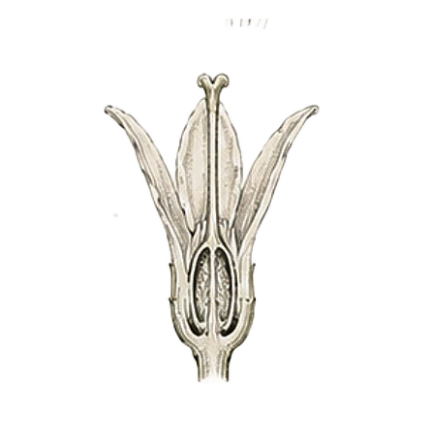
Plate P-26-FLO-03

Four days of white.

Once a year, after the first rain, the whole hill flowers at once and smells of jasmine. Then it is over, and the fruit begins.

Flowering · triggered by first rain
Duration · approximately four days
Coffee flower, face view
a · corolla, five lobes
Coffee flower, three-quarter view with anthers
b · anthers exserted
Coffee flower in longitudinal section
c · longitudinal section
Plate P-26-CHE-04

Green, breaker, turning, ripe.

Picked by hand, only at the last stage. A branch is visited more than once, because the hill does not ripen on a schedule.

01 · Green
02 · Breaker
03 · Turning
04 · Ripe
Subramanya Estate Survey · 2026 Fruit development & bean in section
Plate P-26-ROO-05

Into the red earth.

What holds the plant to this particular soil, and the soil to this particular hill. Below it, the rock — and the springs that feed both our gifts.

LitterLeaf fall from the shade canopy, returned to the soil.
TopsoilWhere the lateral roots run, and where organic carbon is highest — 0–20 cm, falling steadily with depth.
LateriteSandy clay loam, red and well drained — and prone to leaching in heavy rain.
BedrockWeathered gneiss, fractured. The roots stop; the water does not.
Shade earns the carbon · ≈1.74 % under coffee and cardamom, against 0.12–0.63 % in old rice ground
Soil texture
Sandy clay loam
Soil reaction
pH 5.0 – 7.83
Source
ICAR-KVK Kodagu
Organic carbon
≈ 1.74 % mean
IV · Harvest — process register

The working year.

The estate's calendar is set by rain, not by schedule. The sequence is fixed; the dates move each year.

Stage 04 of 06

Picking

Selective, by hand, at the ripe stage only. A branch is visited more than once, because the hill does not ripen on a schedule.

TriggerFruit reaches ripe stage
WindowNovember – January
MethodHand, selective, repeat passes
RecordVerified
V · The record

What is measured, and what is not.

We publish only what we have measured, and we say who measured it. Figures attributed to a state agency are regional records for Karnangeri, not readings from our own instruments. Where a field is still open, the measurement has not been made — not withheld.

Sources · KSNDMC (rainfall) · Karnataka State Meteorological Department (temperature) · ICAR-KVK Kodagu Soil Laboratory (soil)
Estate elevation3,840 ft MSL
Latitude12.442132° N
Longitude75.752910° E
Soil seriesLateritic, well drained
CultivationShade-grown under canopy
Harvest windowNovember – January
Annual rainfall2,500 – 4,500 mm · KSNDMC, 2025
Temperature range15 – 30 °C · State Met Dept.
Soil textureSandy clay loam · ICAR-KVK Kodagu
Soil reactionpH 5.0 – 7.83 · strongly to slightly acidic
Organic carbon≈ 1.74 % mean, shaded plantation · ICAR-KVK Kodagu
Tasting notesFirst cupping · harvest 2026

The atlas grows with the estate.

Plates are added as they are completed and figures as they are measured. The document edition is available for archive, submission and print.

The document edition → ← Back to Pattolé